 Overview of Multi-expert Prompting from Long et al. (2024).
Abstract
We present Multi-expert Prompting, a novel enhancement of ExpertPrompting (Xu et al., 2023), designed to improve the large language model (LLM) generation. Specifically, it guides an LLM to fulfill an input instruction by simulating multiple experts, aggregating their responses, and selecting the best among individual and aggregated responses. This process is performed in a single chain of thoughts through our seven carefully designed subtasks derived from the Nominal Group Technique (Ven and Delbecq, 1974), a well-established decision-making framework. Our evaluations demonstrate that Multi-expert Prompting significantly outperforms ExpertPrompting and comparable baselines in enhancing the truthfulness, factuality, informativeness, and usefulness of responses while reducing toxicity and hurtfulness. It further achieves state-of-the-art truthfulness by outperforming the best baseline by 8.69% with ChatGPT. Multi-expert Prompting is efficient, explainable, and highly adaptable to diverse scenarios, eliminating the need for manual prompt construction.
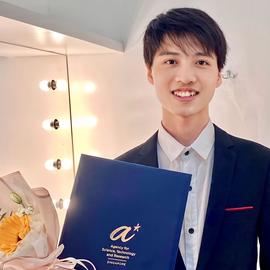
Xuan Long Do
A*STAR Doctoral Student (Aug ‘23)
Co-Supervised by Kenji Kawaguchi and Nancy F. Chen
PhD Candidate August 2023 Intake
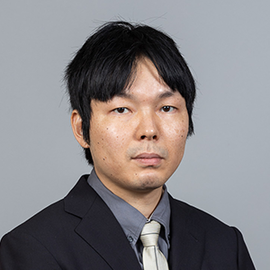
Kenji Kawaguchi
Research Collaborator
NUS Presidential Young Professor in the Department of Computer Science, leading the Deep Learning Lab

Min-Yen Kan
Associate Professor
WING lead; interests include Digital Libraries, Information Retrieval and Natural Language Processing.

Nancy F. Chen
Research Collaborator
ASTAR Fellow; leads the Multimodal Generative AI group and the AI for Education Programme at ASTAR